
On a quiet stretch of Des Moines Memorial Drive in South Seattle, the Sea Mar Museum of Chicano/a/Latino/a Culture rises like a long‑overdue acknowledgment. Its brick exterior doesn’t shout; it invites. Inside, the rooms hum with the stories of families who crossed borders, harvested fields, organized classrooms, and built communities across Washington state—often without seeing their histories reflected anywhere on a museum wall.
For Rogelio Riojas, founder and CEO of Sea Mar Community Health Centers, the museum is a promise kept. “We wanted to make sure the contributions of Latinos in Washington state are recognized and preserved for future generations,” he told The Seattle Times when the museum opened in 2019. It was a simple statement, but one that captured decades of work—both visible and invisible—by the region’s Latino communities.
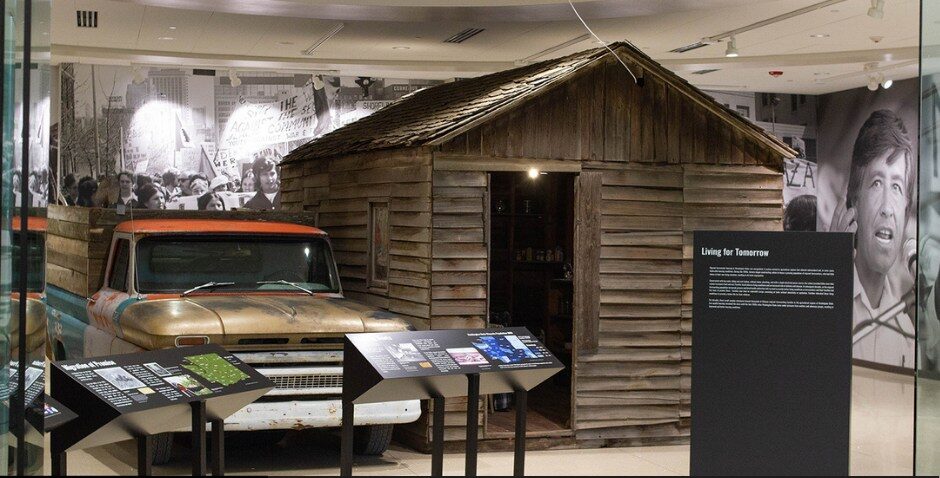
Walking through the galleries feels like stepping into a living archive. One of the most arresting sights is a pair of original farmworker cabins, transported from Eastern Washington. Their narrow wooden frames and sparse interiors speak volumes about the migrant families who once slept inside after long days in the fields. The cabins are not replicas or artistic interpretations; they are the real thing, weathered by sun, dust, and time. They anchor the museum’s narrative in the physical realities of labor that shaped the state’s agricultural economy.
Sea Mar describes the museum as “dedicated to sharing the history, struggles, and successes of the Latino community in Washington state,” a mission that plays out in photographs, letters, student newspapers, and oral histories contributed by community members themselves. These aren’t artifacts chosen from afar—they’re family treasures, personal archives, and memories entrusted to the museum so they can live beyond the kitchen tables and shoeboxes where they were once kept.
The story extends beyond the museum walls. Just steps away is the Sea Mar Community Center, a sweeping, light‑filled gathering space designed for celebrations, performances, workshops, and community events. With room for nearly 500 people, a full stage, a movie‑theater‑sized screen, and a catering kitchen, the center was built with one purpose: to give the community a place to see itself, gather, and grow. Sea Mar describes it as “a welcoming space for families, organizations, and community groups to gather, celebrate, and learn,” and on any given weekend, it lives up to that promise.
Together, the museum and community center form a cultural campus—part historical archive, part living room for the region’s Latino communities. Students come to learn about the Chicano activists who reshaped the University of Washington in the late 1960s. Families come to see their own histories reflected in the exhibits. Visitors come to understand a story that has long been present in Washington, even if it wasn’t always visible.
The Sea Mar Museum is open Monday through Friday from 8:00 a.m. to 5:00 p.m. and Saturdays from 10:00 a.m. to 3:00 p.m., offering free admission to anyone who walks through its doors. For many, it’s more than a museum—it’s a recognition, a gathering place, and a testament to the people who helped shape the Pacific Northwest.