
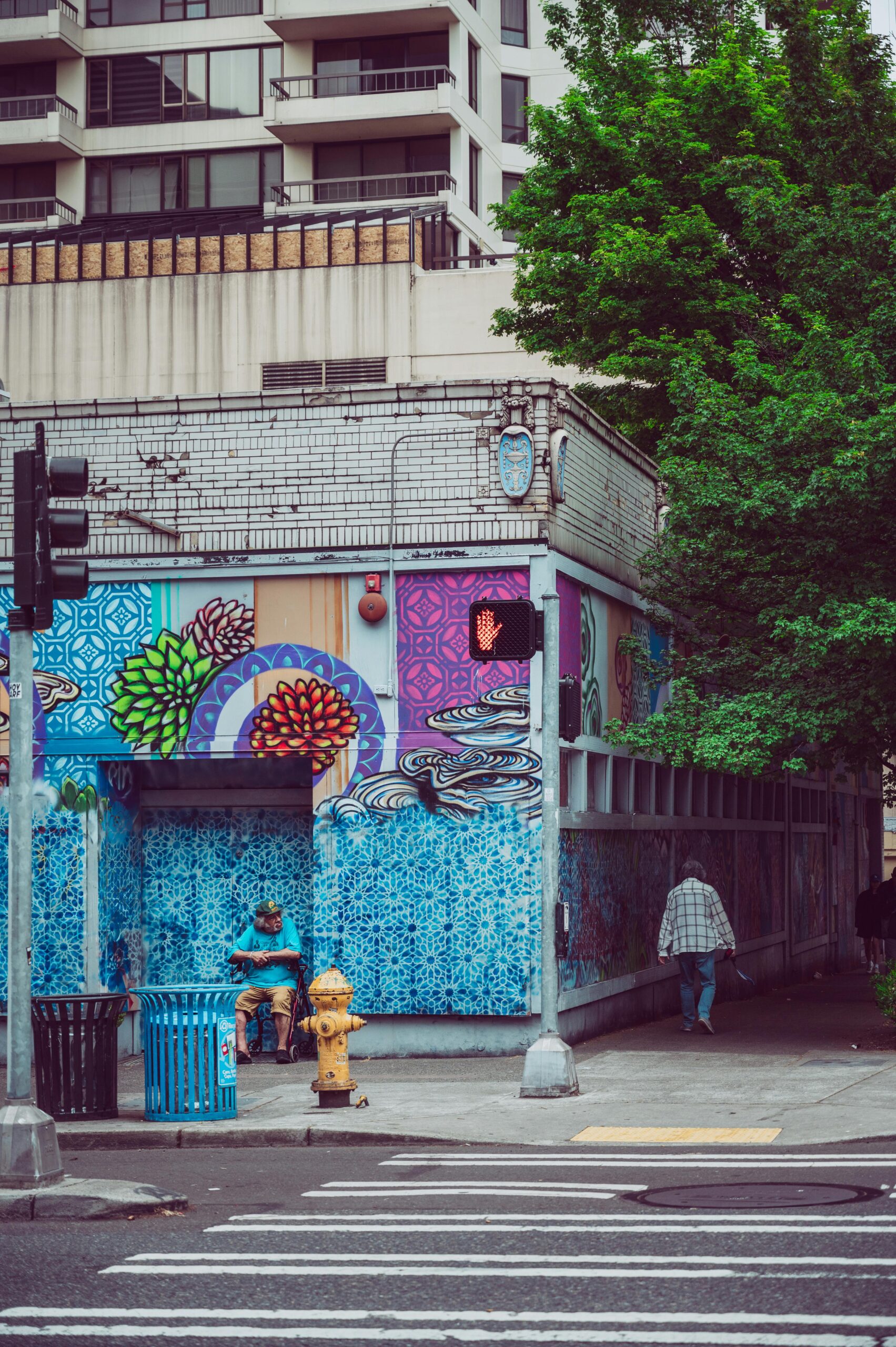
Many Latino artists in Seattle use walls as canvases to tell stories and display powerful messages. One of them is Rene Julio Diaz, a muralist from Mexico City who believes mural art must be meaningful to everyone, not just those who share his background.
“I’m not really into decorative arts, because for me, it needs to be relevant.” Diaz said. “Whenever I paint, I try to put something cultural or something that displays current situations. I try to talk about what is happening or what needs to happen. It might look pretty, but I try not to make it just decoration.”
For Diaz, Seattle has been a welcoming canvas for his mural arts. Before he begins to paint, he sketches his ideas to show business owners what he’d like to display. Many Mexican restaurant owners – already familiar with the mural art culture – appreciate Diaz’s dedication and recognize the cultural significance.
“In Mexican restaurants, I have been free to paint whatever I want. The owners have been very open to that,” he said. I give them a sketch and I get their permission. Many buildings in Mexico had murals, and now they are having projects to paint murals for the upcoming World Cup.”
Diaz added that the city welcomed him even when he lived as an undocumented resident. One of the most memorable moments he had was at Washington Middle School, a place that helped him establish his career.
“As I painted for Washington Middle School, they knew I was undocumented but they found a way to pay me and make it happen,” he said. “I’m very grateful for Seattle, and I would not move out of the city unless I have to.”
Diaz said he feels a responsibility to give something back to the city – not only to Latino communities, but also those that oppose immigration.
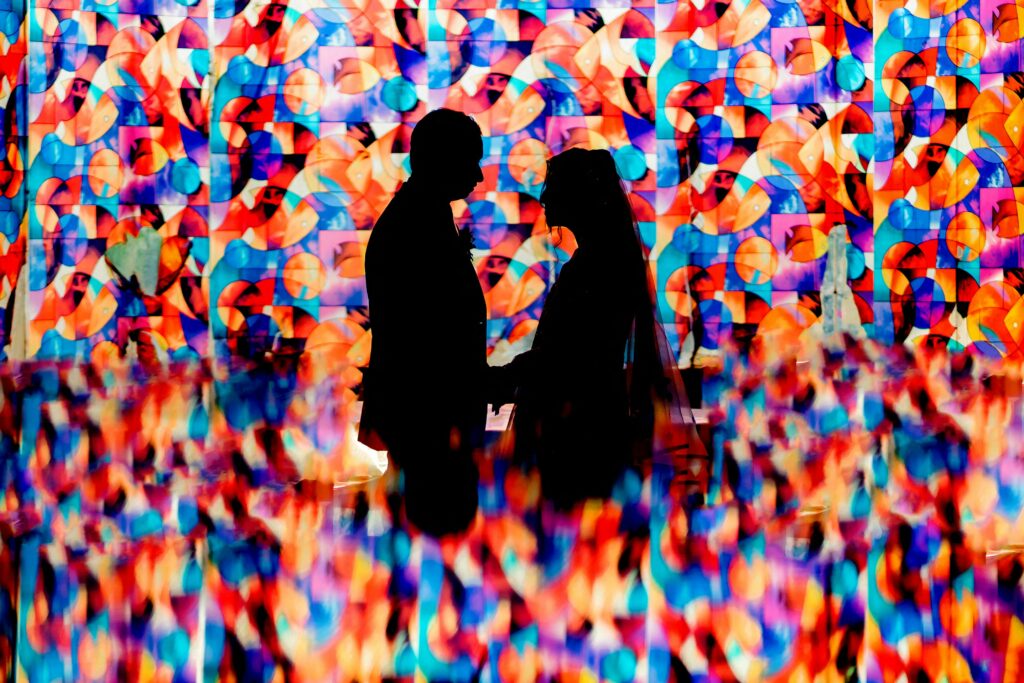
Casa Patron, a Mexican restaurant located near the Roosevelt Light Rail Station, displays one of Diaz’s pieces: “America Floreciente.” Owner Maximiliano Garcia said he thinks about his own culture when he looks at Diaz’s mural.
“If you take a look at the art, all the details are related to the entire American continent,” Garcia said. “Whenever people think of America, they usually think of the North, but this includes details about South America as well.”
Garcia said his customers look at the art with curiosity and questions, and these interactions help create a more friendly environment for all visitors.
“They asked me many questions such as ‘why this,’ and ‘why that,’” he said. “We have food that came directly from South America and Mexico, so when people visit from there, we talk about food and this painting, so this art creates a sense of connection. This was painted around 2009 and yet it still grabs people’s attention,” Garcia said.
Silvana Centurion, who recently began working at Casa Patron, said she still remembers what she thought of the painting when she saw it for the first time.
“It is the very first thing that caught my eye. It’s not just a simple form of art, but it also has a lot of power,” Centurion said. “When you look at it, it just makes you stare at it and that is the whole purpose of it. I know so many people from everywhere and so many Mexican restaurants, and Casa Patron is one of the only restaurants I repeatedly come to.”
Centurion said murals remind her of what Latin American communities value and emphasized how it can help others to build connections with their past.
“I’d love to see more Latin inspired murals, because it emphasizes warmth, family, love, and trust,” she said. “If you are from Latin America and have done bad things in the past, you’d still have a sense of respect, loyalty, communities, and about what we’ve been through. Arts like this can be a trigger and it might encourage people to go back and do things they enjoyed doing in the past.”
Latino murals can also be found in the U District neighborhood. “Knot of Freedom,” one of Diaz’s murals, is located by the intersection of Northeast Campus Parkway and Brooklyn Avenue Northeast. It is located only a few blocks away from the University of Washington, which makes it easy to grab college students’ attention.
Daniela Maqueda, a Latina UW sociology major, said murals could evoke various emotions with their powerful messages.
“I believe students who may relate or empathize with our current situations may see this as a powerful piece,” Maqueda said. “They’ll feel heard, spoken to, because many aren’t by who is supposed to.
Diaz’s mural reminded Maqueda of a painting she saw from her childhood in Pacoima, California: “You Are Not Alone,” painted by Juan Pablo in honor of Gabriel Hernandez, a child abuse victim.
“This art made me think of the ‘You Are Not Alone’ mural,” Maqueda said. “I instantly thought of America’s current state when I saw this art. My interpretation is that although our national symbol is meant to represent freedom and liberty, many are tied to the contradictory notions set by inequality and oppression.”
Maqueda hopes Seattle will display more mural arts so that people can feel a sense of connection and belonging.
“I think expressing one’s feelings, opinions, and motives can be shown in numerous ways, and I believe doing so in such a creative manner can help reach their goal to others more effectively,” she said, “I know Seattle is filled with talented artists who have the potential to make inspiring stories through their hands.”
Jeongwoo Kim is a fourth year student pursuing a double major in Journalism and Public Interest Communications with English at the University of Washington. He moved to the United States in 2013 from South Korea and wants to pursue a career in journalism or education.