
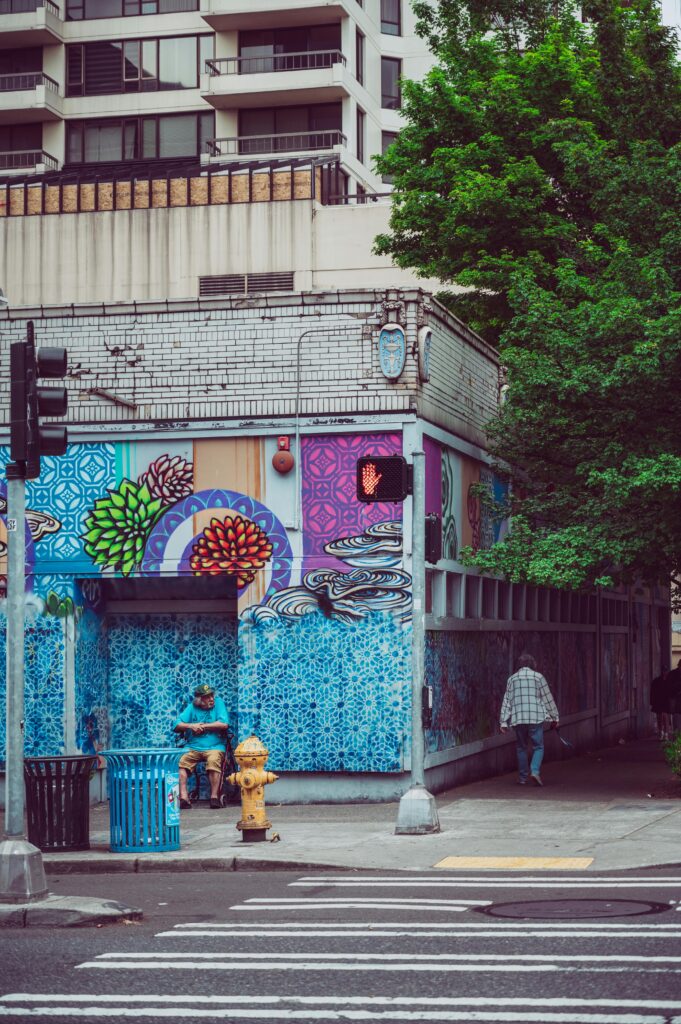
Seattle Murals Tell Stories of Migration, Identity, and Community
In Seattle, walls have become a way to talk. For muralist Rene Julio Diaz, art is not decoration but a public conversation about culture, migration, and the present moment
In Seattle, walls have become a way to talk. For muralist Rene Julio Diaz, art is not decoration but a public conversation about culture, migration, and the present moment
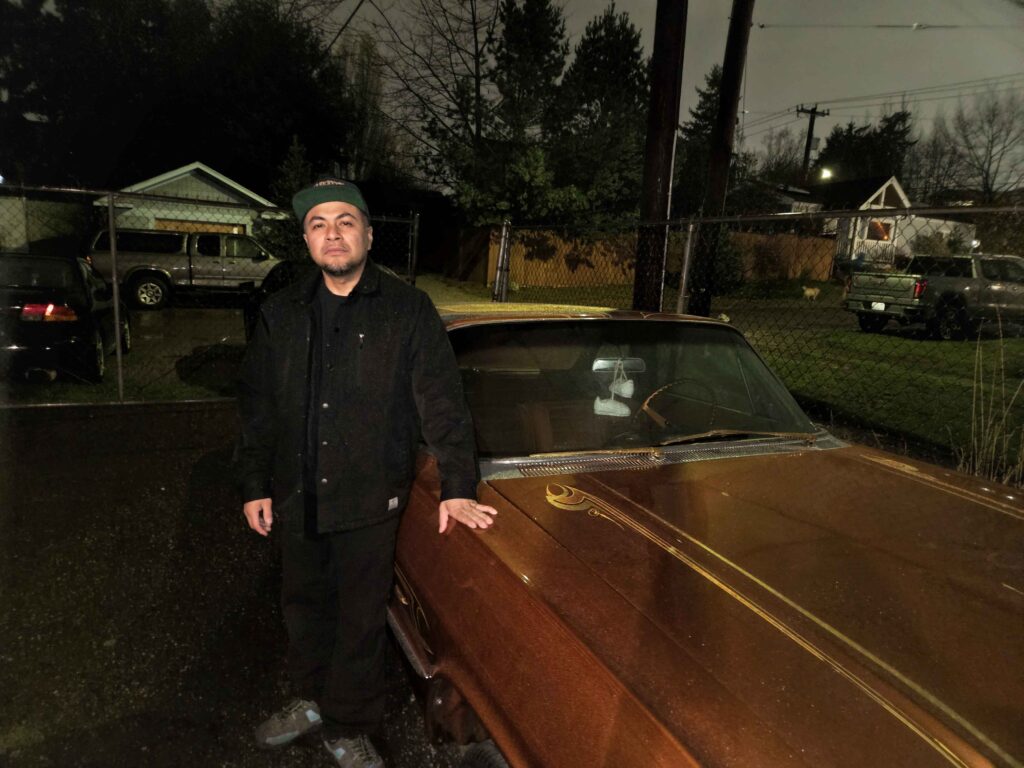
Loud stereo music mixes with the sound of car engines in an out-of-the-way garage in Kent. In the corner of
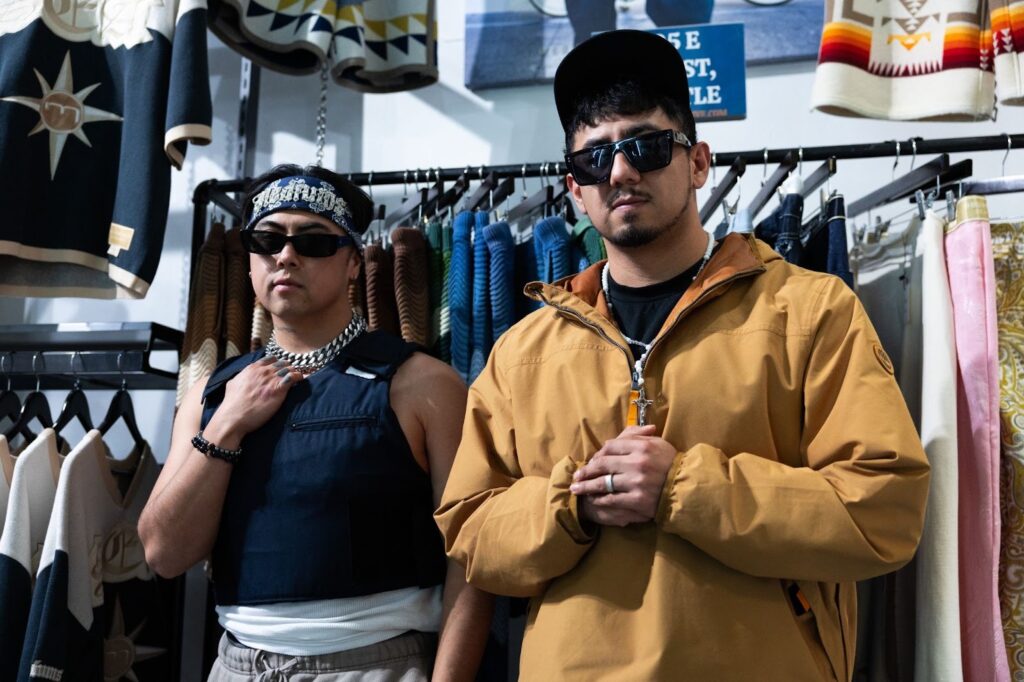
The Capitol Hill storefront of Mediums Collective, a Seattle-based and Mexican-owned streetwear fashion brand, is a sleek vessel of style,
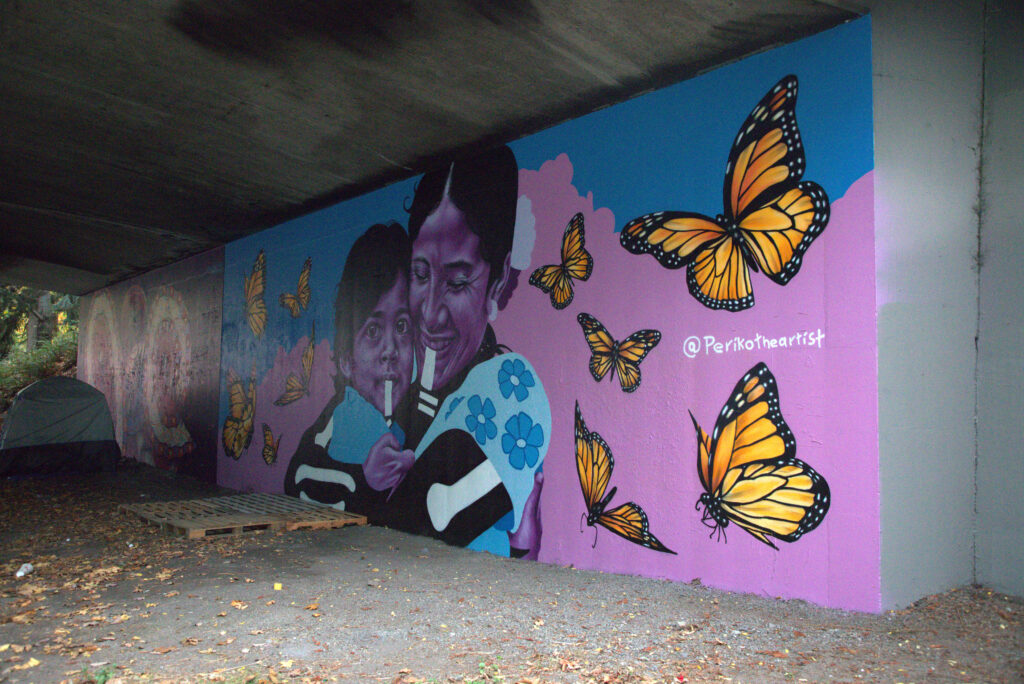
Each mural reflects the artists’ own stories. Rene Julio’s “The Knot of Freedom” explores the fear and pressure he felt during his years as an undocumented migrant. A few walls down, Gerardo Peña’s “El Abrazo” centers on a mother and daughter’s embrace, inspired by his return to Mexico after nearly three decades away. Visitors now stop, scan QR codes, and follow the murals on social media, turning the corridor into a space where personal history and public art meet.
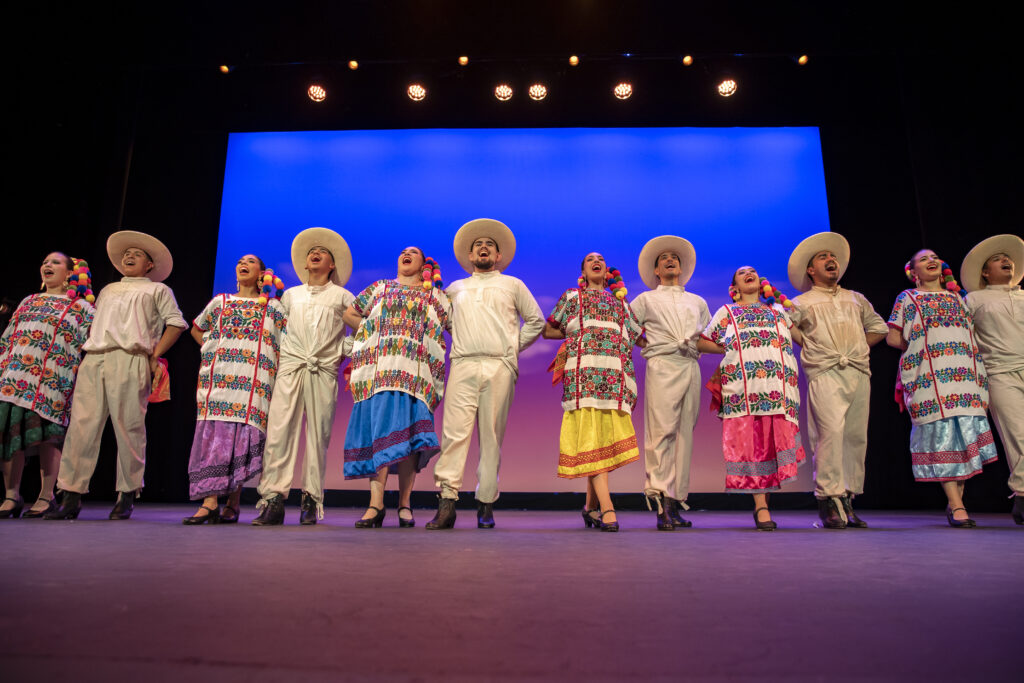
For more than 50 years, Los Bailadores de Bronce has brought the colors, rhythms, and spirit of Mexican folklórico dance to audiences across the Pacific Northwest. Founded by University of Washington students in 1972, the company remains a vibrant volunteer-driven organization that continues to inspire both Latino and non-Latino communities.

“Our community is at the best it’s ever been, period,” said drag performer Queen Andrew Scott.

“I really do feel like community means having people there to support you and being uplifted, being empowered, and being inspired.”
“It becomes a way to assert identity, presence, and visibility, despite efforts or tendencies to erase or silence a population.”
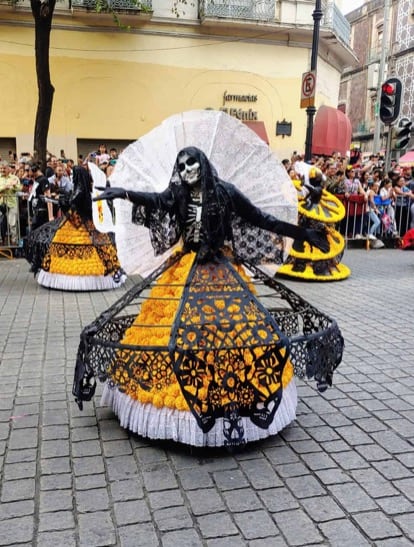
Día de Muertos, or Día de los Muertos as it is called in the United States, is NOT Mexican Halloween nor is