
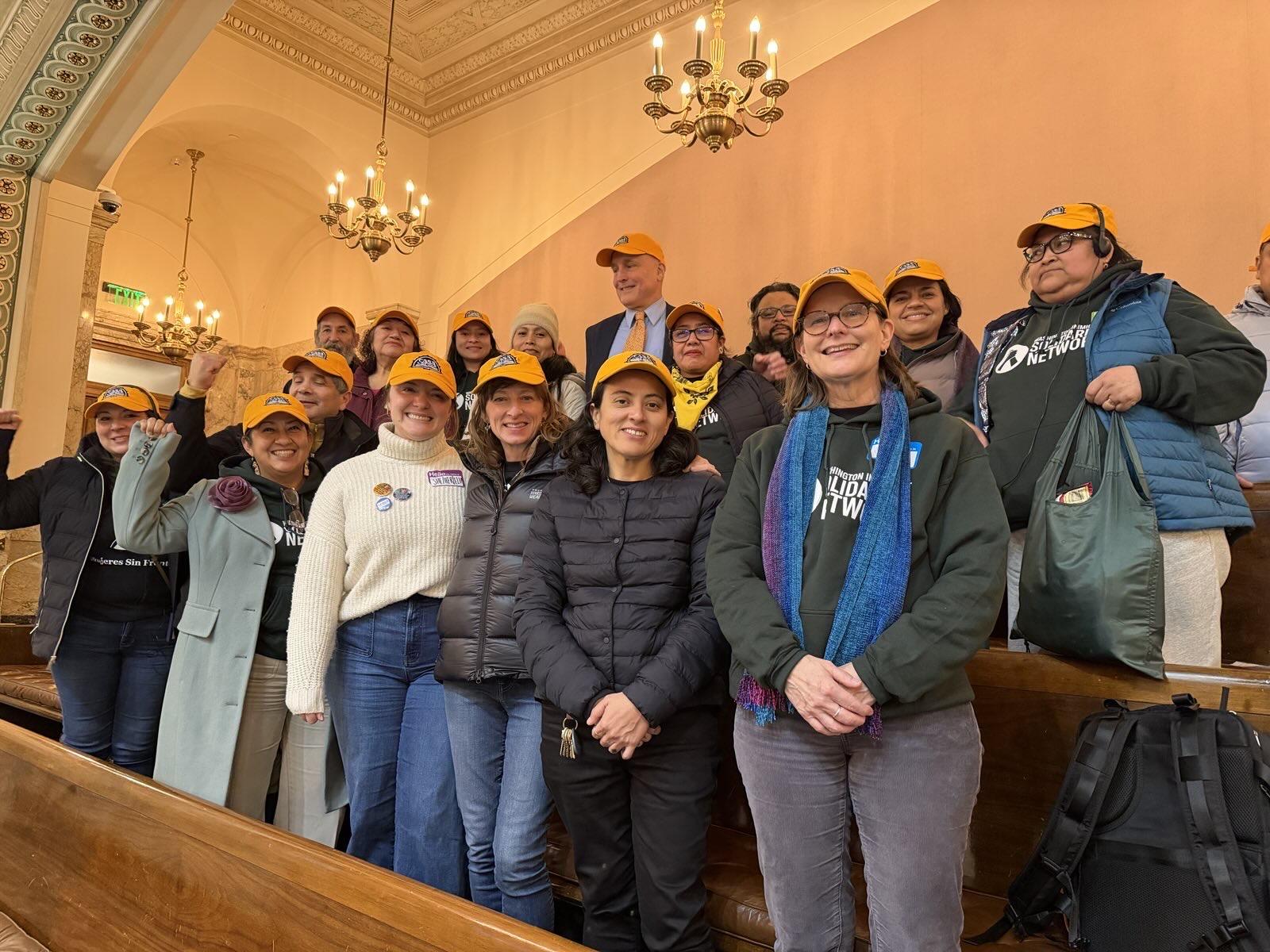
Years of rallying on the steps of the Capitol building, marching through streets and testifying before legislators have paid off for Washington’s house cleaners, childcare providers, gardeners and their supporters.
On March 9, Gov. Bob Ferguson signed the Domestic Workers Bill of Rights into law, making Washington the 13th state to ensure basic labor protections for domestic workers, according to the domestic employers network Hand in Hand. These rights include fair pay, written contracts and protection from discrimination for workers doing domestic services in a private residence.
Though these workers provide vital help to families and homeowners across the country, they have been excluded from fundamental labor rights for decades.
Silvia González, a community organizer at Casa Latina, helped lead the statewide fight for these protections. Casa Latina works for the well-being of Latino immigrants in Seattle, offering education, community organizing opportunities and connecting domestic workers with temporary jobs through their Day Worker Center.
González came to Casa Latina in 2011 to find work as a house cleaner. When she learned that domestic workers like herself did not have fundamental rights to fair pay and often had to endure unsafe workplaces to make a living, she wanted a domestic workers bill of rights, González said.
In 2013, she joined Casa Latina’s staff, supporting their Mujeres Sin Fronteras program. This leadership program provides a space where women domestic workers can organize to advocate for better working conditions.
“This changed my life completely,” González said. “Working closely with Mujeres Sin Fronteras — every woman has different stories. Every woman is different, and these give to me more power for fighting for the labor rights. And it’s not easy, because most of these women are women of color, immigrant women, and they have a lot of challenges.”
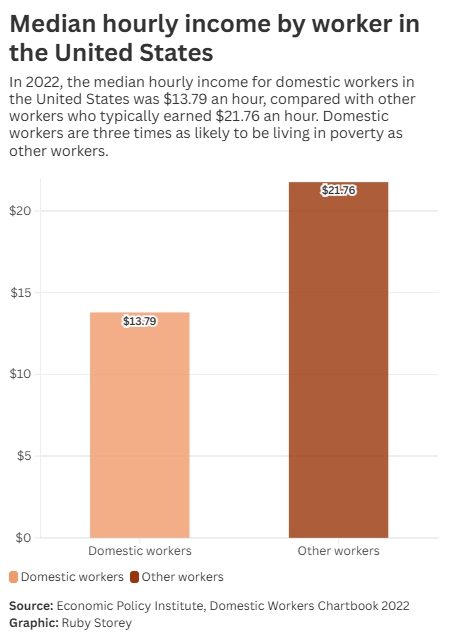
In the United States, the domestic workforce is largely made up of Latino, Black and Asian American women. These workers are also twice as likely to be immigrants than other workers. González said it has been hard to rally domestic workers to speak to legislators in the state Capitol because they are afraid of current threats of immigration enforcement.
González’s time at Casa Latina and her own career as a domestic worker is not the only part of her life that has informed her activism. She has memories of her own mother working as a lavandera, doing laundry as a domestic worker in Mexico.
González described watching her mother spend hours washing clothes by hand on the banks of a river. “[Domestic workers] don’t receive enough money,” she said, her eyes tearing up under green sparkly eyeliner.
When González started her career as a domestic worker in the United States, these memories gave her the power to fight for fair pay for domestic workers, she said.
González went on to organize for Seattle’s bill of rights while working as a house cleaner. She is now one of 13 members on Seattle’s Domestic Workers Standards Board, which helps introduce further protections for domestic workers at the city level.
Though domestic workers in Seattle have had labor protections since 2018, those working in other areas of the state have been fighting for these fundamental rights for years.
González is also on the National Domestic Workers Alliance Board of Directors, who are trying to pass nationwide protections for domestic workers. Even as her work has risen to city, state and federal levels, González said she thinks of every win as a collective effort.
“It’s not only me. It’s Casa Latina also,” she said. “All my compañeras, all domestic workers — all the voices come with me.”
Lisbeth H., who asked to omit her last name, is another domestic worker who has been advocating for this legislation. She has helped raise over 28 children in her career as a childcare provider, commuting from Lynnwood to Seattle for nanny jobs.
“What it means for me, is that I don’t have to go and just ask for things to my future employers. I would go and say, there’s a bill that is protecting me,” Lisbeth H. said. “I think that kind of backs me up, supports me and gives me the strength to advocate more for myself.”
Lisbeth H. said the fair working conditions she has experienced were due to her employers’ ethics and her own negotiation skills, but she knew other workers did not know how to advocate for the same protections in their workplaces.
It was an empowering moment, Lisbeth H. said, to speak out in support of these protections. She has been rallying for a statewide bill of rights since 2024. This year, she worked behind the scenes to help pass the law with the Nanny Collective — an organization focused on educating childcare providers across Washington state about their rights in the workplace.
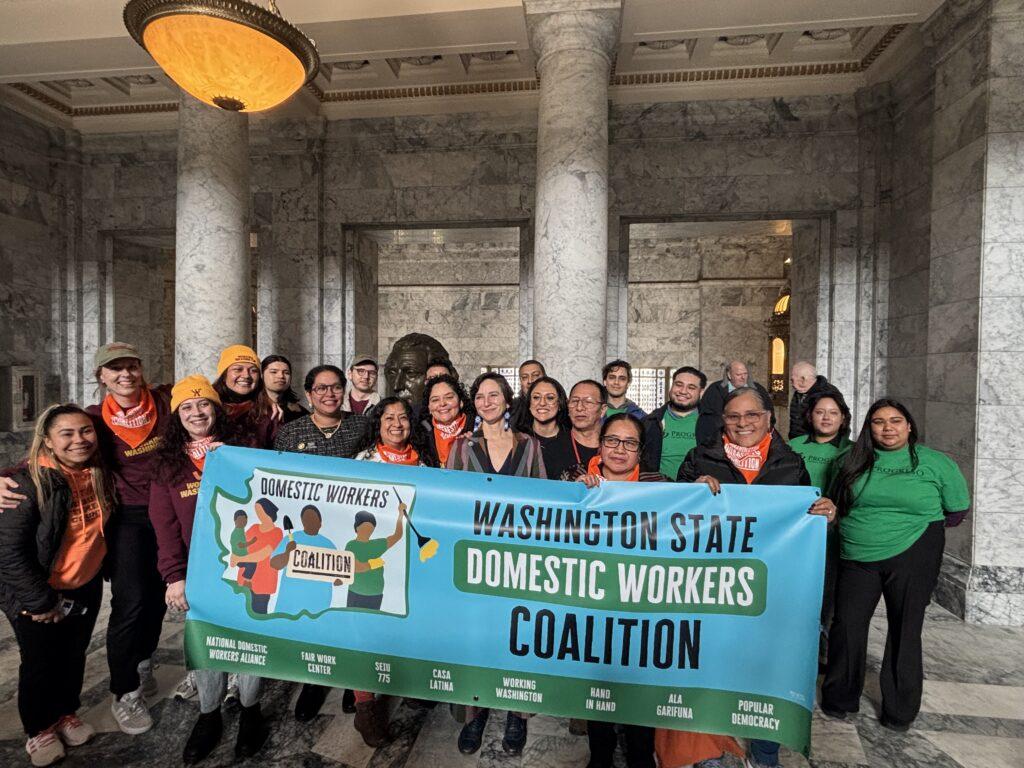
Casa Latina and the Nanny Collective are both part of the Washington Domestic Workers Coalition, a group of more than eight community organizations that came together in 2024 to pass the statewide bill.
Now, domestic workers across Washington will have rights to minimum wage, overtime pay, written agreements in a language they understand, advance termination notices, safer working environments, protection from retaliation and the right to file a complaint if a violation occurs.
State Sen. Rebecca Saldaña, D-Seattle, has been advocating for these protections for domestic workers since Seattle’s version of the bill passed in 2018. Saldaña was standing next to Ferguson in the Capitol when he signed the bill into law this March.
“It was so energetic. We had children, we had organizers, we had workers that had been working on this for basically a decade,” Saldaña said.
“This workforce in particular is so vulnerable, so under valued, so historically invisible,” Saldaña continued. “To be able to have them take center stage, to be able to have had the amazing bill signing that they’re able to do in the Capitol, and be able then to really see a difference in their workplaces, is priceless.”
The bill, which goes into effect July 1, 2027, helps create clear rules for both domestic workers and employers. Until the bill is in place, González said, she will be raising money to fund the implementation of the law. After that, she will continue advocating for more protections for domestic workers, beyond these basic rights.
This hard fought win owes itself to the ongoing persistence of Washington’s domestic workers and organizers like González and Lisbeth H.
“It was amazing, because since 2024 we tried, we pushed, and things didn’t work as we expected,” Lisbeth H. said. “When this happened, it was like telling everybody, ‘Hey, we won, we got what we need, because this is our work, we deserve dignity, and this will protect us more. It will not depend just on each of us to negotiate. We have a bill that now protects us.’”
Ruby Storey is a freelance journalist, multimedia storyteller and incoming general assignment reporter at My Neighborhood News. In the University of Washington’s journalism and public interest communication program, she has found a passion for local reporting and uplifting the voices of communities who have been underrepresented in mainstream media.