
Community members in Spokane have continued to rally behind three activists facing federal charges for their role in a June 2025 protest that blocked an Immigration and Customs Enforcement (ICE) transport bus, an incident that has since become one of the region’s most closely watched civil‑rights cases. Supporters say the defendants—part of a group now widely known as the “Spokane 9”—were acting to protect two Venezuelan asylum‑seekers who had appeared for a scheduled ICE check‑in when agents unexpectedly detained them and attempted to transfer them to the Northwest ICE Processing Center in Tacoma. Reporting from the Spokesman‑Review and RANGE Media shows that the men had been living legally in Washington while pursuing asylum claims.
As word spread that the detainees were being taken away, hundreds of demonstrators converged on the transport bus in downtown Spokane, forming a blockade that lasted for hours. Videos published by local outlets captured protesters linking arms around the vehicle as police declared an unlawful assembly, issued a curfew, and deployed smoke canisters and pepper balls to disperse the crowd. Spokane Public Radio reported that more than 30 people were arrested on misdemeanor charges that night, and several later faced felony counts of unlawful imprisonment for allegedly preventing the bus from leaving.
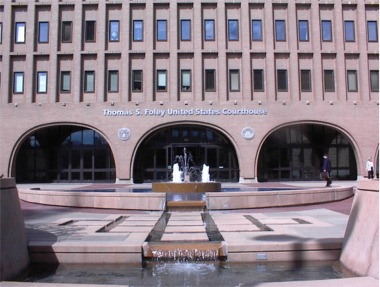
One month later, the U.S. Attorney’s Office for the Eastern District of Washington announced federal conspiracy charges against nine individuals accused of coordinating the blockade. A Justice Department release described the case as an effort to hold organizers accountable for obstructing federal officers, while supporters argued the charges were excessive and intended to deter future protest. Six defendants ultimately accepted plea agreements. The remaining three chose to go to trial, drawing sustained community support, including vigils, fundraising efforts, and court‑watch groups. Public News Service reported that local immigrant‑rights advocates and faith leaders have framed the prosecution as part of a broader pattern of federal overreach in response to civil disobedience.
Meanwhile, the two Venezuelan asylum‑seekers at the center of the protest remained detained in Tacoma for months. The Guardian reported that one man was held for seven months before a federal judge ruled that his constitutional rights had been violated and ordered his release. The Spokesman‑Review later confirmed that both men had entered the United States legally and were complying with immigration requirements at the time of their detention, raising further questions among advocates about ICE’s handling of the case.
Nearly a year after the protest, the Spokane 9 case continues to shape local debates over immigration enforcement, public protest, and the limits of federal authority. Coverage from RANGE Media, The Inlander, and the Spokesman‑Review has documented how the case has galvanized activists and divided public opinion. As the final three defendants face a federal jury, Spokane remains a focal point in the national conversation about the criminalization of protest and the treatment of asylum‑seekers, with community members insisting that the events of June 2025 reflect a deeper struggle over justice, safety, and the right to dissent.